

Zakat

What is Zakat?
Zakat is one of the five pillars of Islam. Linguistically, it means 'to increase, grow, and purify.' Conceptually, it represents the specific rate of wealth that Muslims who possess a certain amount of wealth (the Nisab threshold) must give once a year to the categories specified in the Holy Qur'an, after one lunar year has passed. This worship purifies wealth, cleanses the soul, and strengthens solidarity within the community.
Who is Eligible for Zakat?
In the Holy Qur'an, Surah At-Tawbah, verse 60, the 8 categories eligible to receive Zakat are specified as follows:
The Poor (Al-Fuqara): Those who have enough wealth to cover their basic needs but whose income is insufficient.
The Needy (Al-Masakin): Those who have no wealth or income whatsoever.
Zakat Administrators (Al-Amilina 'Alayha): Those involved in every stage of collecting and distributing Zakat.
Those Whose Hearts Are to Be Reconciled (Al-Mu'allafatu'l-Qulub): Those who are aimed to be brought closer to Islam or prevented from harming Muslims.
To Free Slaves (Fi'r-Riqab): Those seeking financial support to gain freedom, including those in captivity or captivity today.
The Debtors (Al-Gharimun): Those burdened by debt who are unable to repay it.
In the Cause of Allah (Fi Sabilillah): Those striving in the cause of Allah, primarily students of knowledge and those working to elevate the word of Allah.
The Wayfarer (Ibnü's-Sabil): Travelers whose money runs out during their journey or who fall into distress for other reasons.
How Much Zakat Should I Give? How is Zakat Calculated?
Zakat is given at a rate of one-fortieth, or 2.5%, of wealth that reaches the Nisab threshold (the value of 80.18 grams of gold). If a person possesses wealth equal to or exceeding the Nisab after deducting debts and basic living expenses, and one Hijri year has passed over this wealth, they are obligated to give Zakat.
Example: If you have 600,000 TL in cash after deducting debts and basic needs, this amount reaches or exceeds the Nisab threshold (the value of 80.18 grams of gold). Once a Hijri year has passed, a 2.5% Zakat must be given. In this case, your Zakat amount would be 15,000 TL.
If you wish, you can calculate your Zakat using our Zakat Calculator page.
Does the Zakat Amount Change by Year?
The Zakat rate is always fixed at 2.5% (1/40) and never changes. What can change is the cash equivalent of the Nisab threshold. Since Nisab is calculated based on the value of 80.18 grams of gold, its equivalent in local currency varies as gold prices fluctuate. Therefore, when it is said that "the Zakat amount has changed" each year, it actually refers to the updating of the Nisab threshold based on current gold prices. The core Nisab measure and the Zakat rate itself remain constant.
When is Zakat Given?
There is no specific period or month restriction for giving Zakat. However, many Muslims prefer to give their Zakat during the blessed month of Ramadan to reap greater rewards. The essential condition for giving Zakat is that one Hijri year must pass after your wealth reaches the Nisab threshold.
What is the Nisab Threshold?
Nisab is the minimum amount of wealth a Muslim must possess for the obligation of Zakat to become binding. The Nisab threshold varies depending on the type of wealth:
• Gold: The Nisab threshold is 80.18 grams. Once wealth reaches this amount and a year passes, Zakat is given at 2.5%.
• Silver: The Nisab threshold is 561.2 grams. Once wealth reaches this amount and a year passes, Zakat is given at 2.5%.
• Livestock:
Small livestock (sheep, goats): The Nisab is 40 animals. In this case, 1 sheep/goat is given as Zakat.
Large livestock (cattle, water buffalo): The Nisab is 30 animals. In this case, a 2-year-old calf is given as Zakat.
Camels: The Nisab is 5 camels. In this case, 1 sheep/goat is given as Zakat.
• Agricultural Produce (Ushr): The Nisab threshold for agricultural produce is 5 wasqs (approx. 635 kg for wheat, and between 653 kg to 1000 kg for other products). The Zakat rate is 10% (1/10) for naturally irrigated crops (by rain) and 5% (1/20) for artificially irrigated crops involving extra costs.
Can Zakat Be Given to Siblings?
Zakat cannot be given to dependents whom you are already responsible for supporting, such as parents, grandparents, children, and grandchildren. However, if your siblings or other relatives are genuinely poor, it is permissible to give them Zakat.
Can Zakat Be Given to Grandchildren?
A person cannot give Zakat to their direct ascendants (parents, grandparents) or direct descendants (children, grandchildren), because they already bear a financial maintenance obligation toward them. Therefore, even if a grandchild faces financial hardship, it is not permissible for grandparents to give them Zakat. However, other family elders or relatives may provide financial assistance depending on the situation.
Zakat in Brief
Zakat is Fard (Obligatory): Muslims whose wealth reaches or exceeds the Nisab threshold are obligated to give Zakat annually once a Hijri year has passed over that wealth.
The Rate is 2.5% (1/40): Zakat is given at a rate of 1/40 after deducting basic needs and debts from total qualified wealth.
Who Cannot Receive It: Zakat cannot be given to immediate family members whom you are obligated to maintain, such as parents, grandparents, children, and grandchildren.
No Time Limit: Zakat becomes due as soon as a lunar year passes after reaching Nisab, though many choose the holy month of Ramadan to fulfill it.
How Do We Deliver Your Zakat to Those in Need?
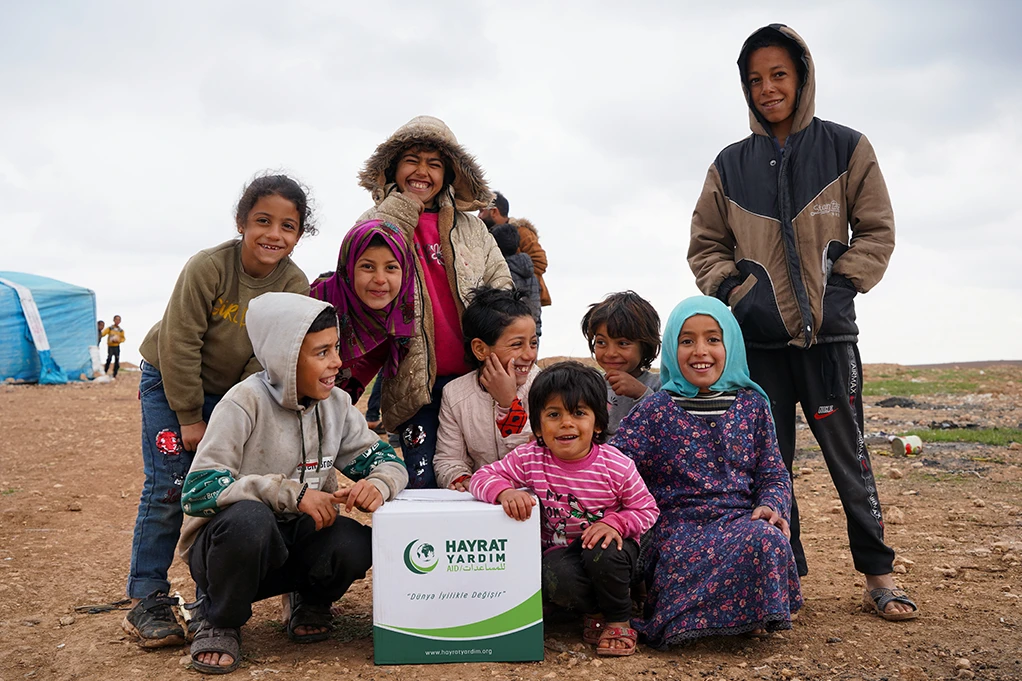
As Hayrat Aid, we evaluate and distribute the Zakat entrusted to us by our donors both locally and internationally, strictly adhering to the principles and boundaries set by Islamic jurisprudence, under three main pillars:
1. Aid for Access to Basic Needs
This category includes those unable to work, such as the poor, the needy, orphans, widows, the elderly, the disabled, students, refugees, war victims, displaced persons, and disaster survivors. We provide cash, in-kind aid (food packs, iftar, clothing), and shelter support based on their specific needs.
2. Aid for Financial Stability
This supports individuals who can work but lack capital or necessary tools. We provide cash assistance and equipment to help them establish sustainable livelihoods, offering ongoing guidance and monitoring until they can stand on their own feet.
3. Aid for the Propagation and Defense of Islam
This encompasses support for students of knowledge, those working to uplift Islamic values, and muallafatu'l-kulub (those new to Islam) to strengthen faith in their hearts.
Direct Delivery: We carry out all these activities through our representatives, institutional partners, and volunteers worldwide, delivering your aid directly to beneficiaries with trust and sensitivity.
How Can I Donate My Zakat to Hayrat Yardım?
• You can make a fast and secure online donation via our website.
• You can transfer your donation via EFT/Wire Transfer to our official bank accounts using the relevant project code.
• You can contact our local representatives.
• You can reach our call center at 444 36 74.

T.C. Council of Ministers Decision with ASSOCIATION WORKING FOR PUBLIC status.
T.C. Council of Ministers Decision with Organization that can collect aid without permission status.